
20 May 2026.Camp is ready. The first golden jackals and the land around

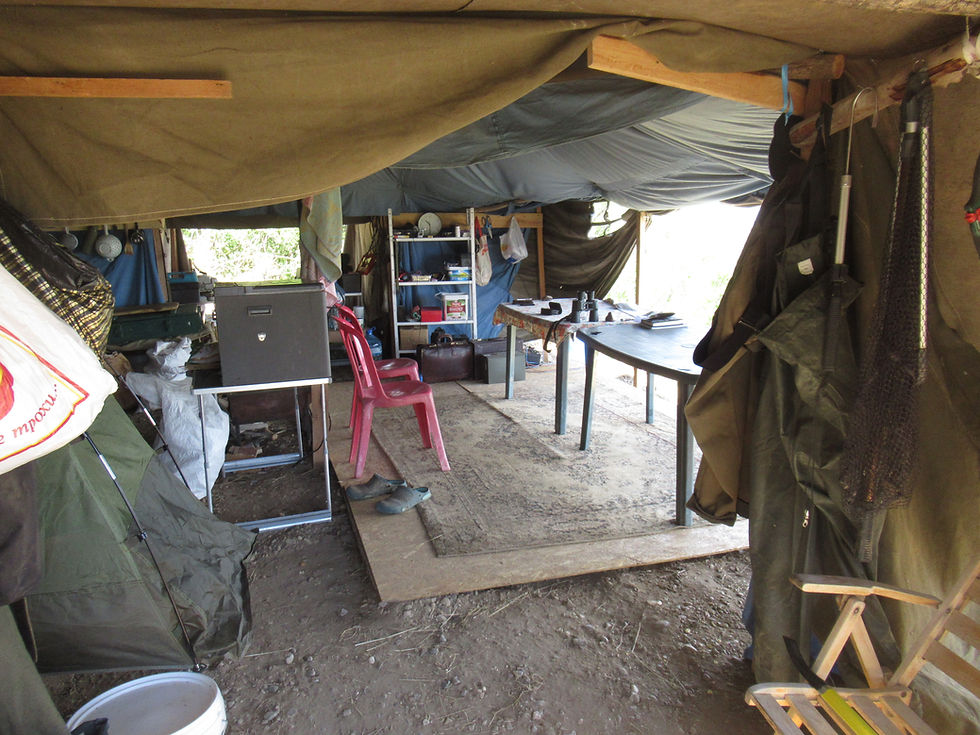
By 20 May the main tent was pitched and the camp began acquiring its usual shape.

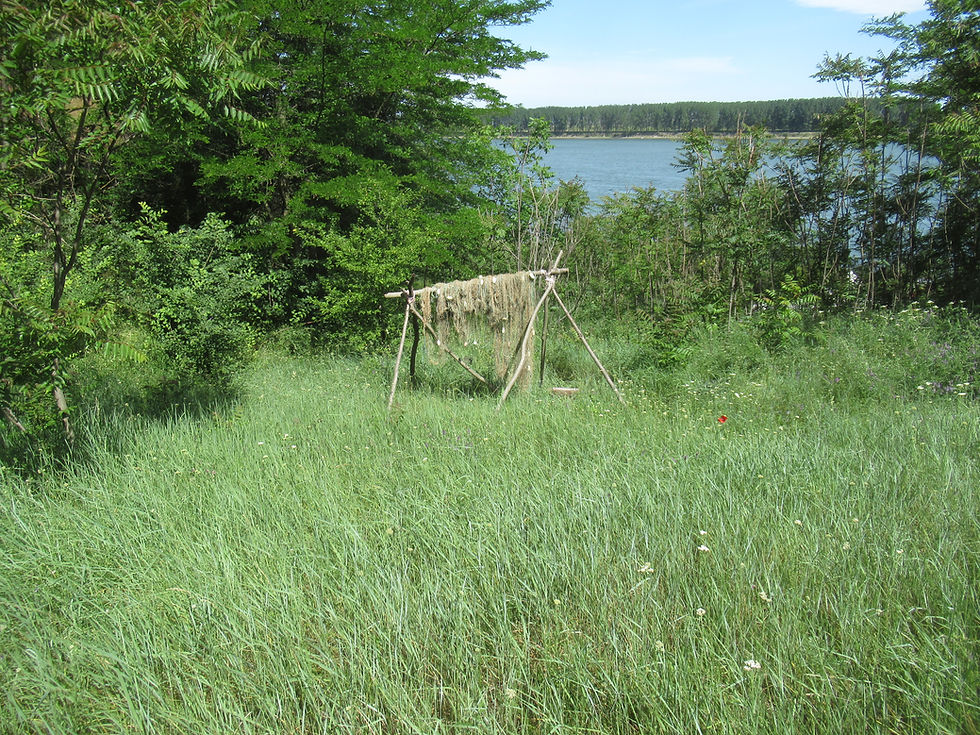
In view of the coming opening of the fishing season (1 June), a net-rack was put up behind the main tent.
Food for the jackals was served at the bait-site each evening at around 18:00 hrs (DST, Sofia).

In the course of the second week of research, the jackal person in the role of bait-site host began to be recognized. The name given to him was Black Tail in view of his very dark bushy tail.

Other defining features were very faint chest chevrons – both the one between the neck and the shoulder, and the one behind the shoulder.
During the first days of getting used to the sudden appearance of the camp and the regular offering of food, Black Tail was still very nervous, and was all the time on the look-out for lurking danger. The camera with its blinking diodes was an object he may have seen for the first time.

Since no menace came from the camera, it was gradually forgotten and attention was turned to the food served. Eating would be often interrupted by looking for signs of danger all around, but mostly to the car-track below the camp which ran alongside the bank.

Another object of continuous attention was the tree-crown arching over the bait-site.
By 23 May, a second jackal appeared. He looked younger, again with dark tail. The chevrons came out clearer with him and the one behind the shoulder ended in two black patches at the ridge. He was given the name of Dark Patch for that reason. There was confident evidence that Black Tail was chaperoning this new and younger person.
At daytime the car-track running parallel to the foot of the bluff rising behind the camp rarely saw any vehicle coming or going, except for my father on his bike when he drove to Vruv. On the other side of the bluff agricultural land stretched for many miles, with great parts of it left to rewild. At this time of the year, poppies dotted the abandoned fields.


Comments